By Joe Mazzola
Stocks inched up early despite rising oil prices after the weekend brought little progress on Middle East de-escalation and more U.S. troops arrived in the region. There were mixed signals this morning on transit through the strait and the status of peace negotiations, but yields fell as investors appeared more focused on the positive. "The fate of the markets appears to be tied to Iran and the trajectory of oil prices," said Nathan Peterson, director of derivatives research and strategy at the Schwab Center for Financial Research (SCFR). "If there is an agreed upon ceasefire, or a substantial de-escalation, it seems near certain that stocks will rally substantially, especially given their current oversold status."
Data this week builds toward Friday's March nonfarm payrolls report. Along the way, investors receive the February Job Openings and Labor Turnover Survey, or JOLTS, tomorrow and more job readings Wednesday and Thursday. In a rare twist, nonfarm payrolls data coincides with the stock market's Good Friday closure, though bond trading does occur that day with an early close. Checking today's light calendar, Federal Reserve Chairman Jerome Powell speaks at 10:30 a.m. ET in a moderated discussion at Harvard. It's unclear if he'll address monetary policy.
Friday was another dismal day as almost every sector dropped amid oil's rally, wrapping up the fifth losing week in a row. Investors were also spooked Friday as China's commerce ministry started probes into U.S. trade practices that have slowed the flow of Chinese goods into the U.S. The move threatens a tenuous trade truce. The Nasdaq Composite enters this week in correction territory, down 10% from recent highs, while the S&P 500 Index is down almost 9%. Nike (NKE) reports tomorrow afternoon—this week's earnings highlight.
Three things to watch
- End of quarter could exacerbate choppiness: Since it's the last week of the quarter, volatility could be higher than normal the next two days amid "window dressing." That's a term for fund managers shifting positions before the quarter ends to add better-performing names and drop worse ones. With the market performing so poorly over the past few weeks, it's possible some late-quarter short-covering could also emerge, but these aren't normal times, geopolitically. During dramatic events not related to the market itself, it's more difficult to pinpoint things like technical support. The same held true during the first few weeks of the pandemic six years ago, and recent trading saw hedgers overwhelmingly seeking protection from volatility, a bearish stance. Trading volume was on the low side late last week, which can imply weak conviction, meaning last week's losses might not fully reflect broader thinking around the markets.
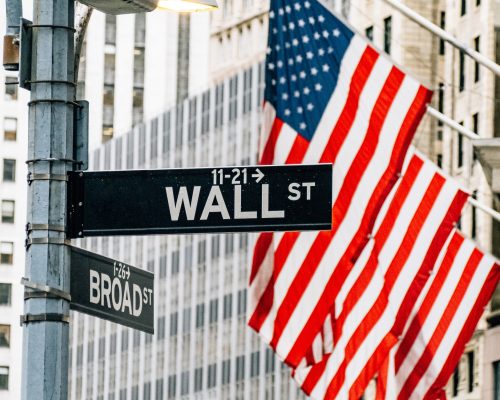
- Sector check: It's been a bitter March on Wall Street and that shows up in the sector scorecard. All but one of 11 S&P 500 sectors are down over the last month, with cyclicals that thrive in a strong economy among the worst performers. Materials and industrials are two of the four at the bottom, along with communication services after Meta Platforms (META) sank almost 8% last Thursday on a negative jury ruling regarding social media. Energy leads all sectors and is the only one up over the last month, sporting 12% gains, while defensive utilities are a distant second "best" with a 3.9% loss. Tech is in the middle, down more than 6%. For a while, chip stocks stayed above water, but that changed last week with a dramatic drop on the memory side amid growing product shortage and fresh AI competition concerns. The PHLX Semiconductor Index (SOX) closed below its 100-day moving average Friday for the first time since last spring's tariff "liberation day" selloff. And with earnings approaching, bank stocks are under pressure from a flattening yield curve that makes borrowing and lending less profitable.
- Greenback holding up: The dollar index topped 100 again early today, near recent highs. "The dollar's actually held pretty steady," said Collin Martin, head of fixed income research and strategy at SCFR, in Friday's Schwab OnInvesting podcast. "I think there's a few reasons for that. One is the rise in yields we've seen. If yields rise or interest rate differentials come in a little bit, investors globally might see more value in U.S.-dollar securities." Investors also might be flocking to the dollar as a safe haven. "If we see growth prospects fluctuating, the U.S. might be positioned a little bit better right now than, say, Europe, given the rise in energy prices and how that flows through to the economy," Martin added. "But we haven't seen the huge moves in the dollar that we've seen in U.S. Treasuries." One thing looking shakier, however, is credit spreads, which have begun widening amid concerns about the war. High-yield spreads, in particular, are up, a sign of how riskier investments can be affected by world events.
Continue Reading Here